Patio Seating Ideas · THE GUIDE
Wrap-Around Tree Bench for Potted Feature Containers
Paved courtyards and open terrace slabs often lack a natural focal element, appearing stark under bright overhead sun. Building a freestanding octagonal wooden bench around a large potted half-barrel creates an inviting social hub while showcasing a specimen dwarf citrus tree. Unlike traditional in-ground tree benches that risk root girdling as the trunk expands, wrapping a container preserves complete control over soil, drainage, and seasonal relocation. This modular woodwork brings functional perimeter seating to bare hardscapes, transforming an isolated container plant into an architectural centerpiece suited for entertaining and casual garden observation.
Jump to the checklist ↓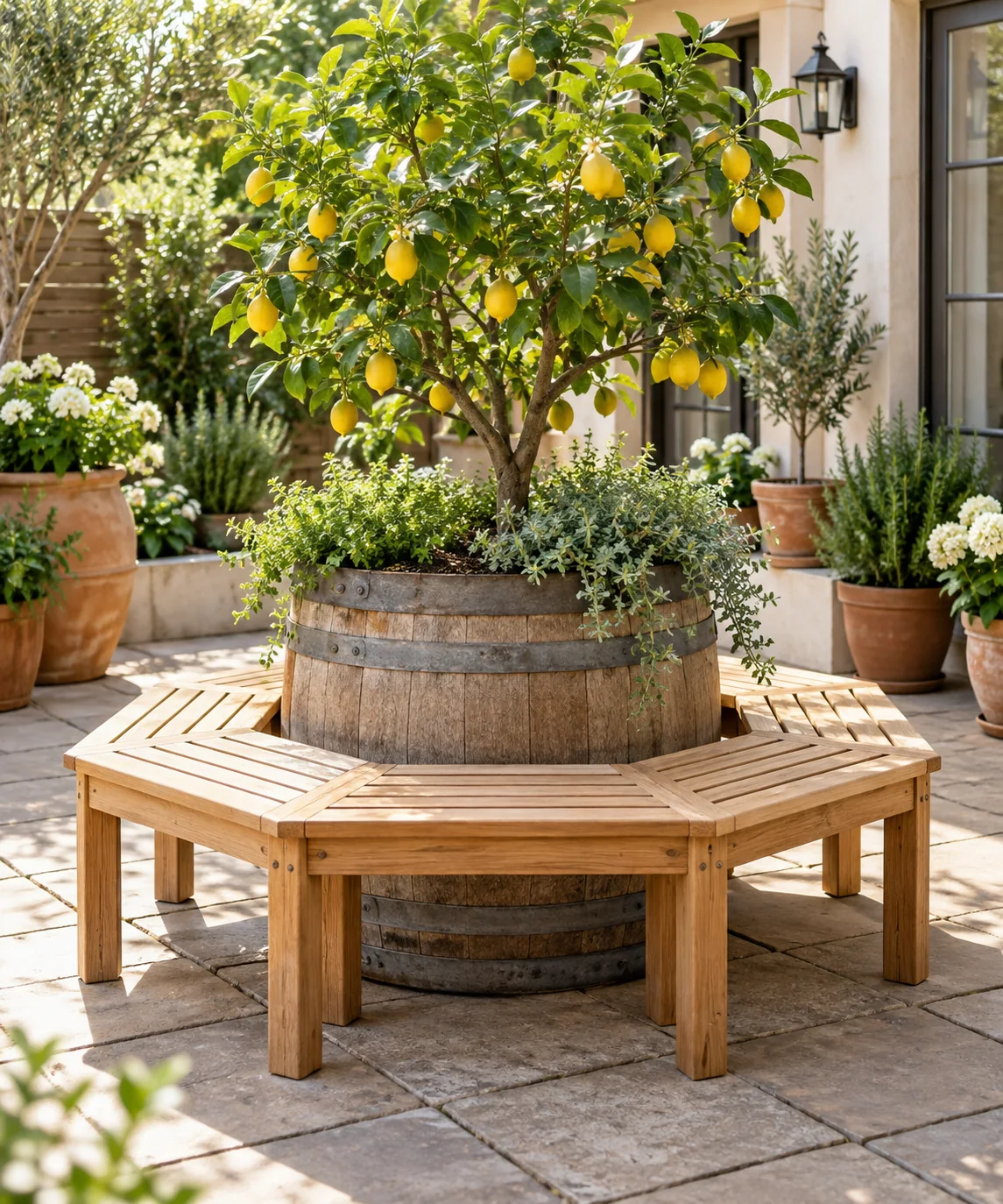
Container Sizing and Practical Offsets
Creating a freestanding wraparound bench begins with selecting an appropriately sized planting container. Large planters, such as durable wooden half-barrels or reinforced composite urns, serve as substantial centerpieces for paved terraces and courtyards. Ensure the bench's central opening leaves practical perimeter clearance around the pot rim. This open margin provides room to reach inside for weeding, soil top-dressing, and manual watering without soaking the surrounding seat boards or pinching fingers during container adjustments.
Modular Octagonal Framing Geometry
Building the bench in two detachable semi-octagonal sections or interlocking modular segments allows direct placement around a container without lifting heavy, soil-laden pots over the framework. Mitering seat planks to match the multi-sided layout creates clean joints that shed water toward outer edges. Assemble the support legs so each resting point sits level on your patio stones or concrete slab, utilizing adjustable outdoor furniture pads where paving slopes slightly for drainage.
Container Drainage and Plant Health
Container plantings rely on unobstructed bottom drainage holes to prevent waterlogged soil and root rot. Position the container on sturdy ceramic pot feet or a heavy-duty wheeled plant dolly within the bench cavity rather than letting it sit flush against damp patio pavers. Select plant varieties appropriate for your local USDA hardiness zone and sunlight conditions, ensuring the species can thrive in a container environment without outgrowing the bench framework prematurely.
Bench Proportions and Layout Planning
Design the seat planks with sufficient depth to provide stable, relaxed seating for guests while maintaining balanced proportions with the central planter. Because a circular or octagonal seat encourages outward-facing conversation, backrests are typically omitted to maintain access to the container plant. Plan your terrace arrangement so that pedestrian walkways around the bench exterior remain wide, clear, and fully accessible, avoiding pinch points near walls or entry doors.
Seasonal Relocation and Maintenance
In climates subject to winter freezing, tender container specimens must be moved to an indoor sunroom, greenhouse, or sheltered garage. A modular, unbolting bench structure makes seasonal container extraction straightforward, allowing you to separate the frame halves and wheel or carry the planter away safely. Clean the bench timber annually with a gentle soap solution, inspect joining hardware for tightness, and allow the woodwork to dry thoroughly before applying any protective outdoor finishes.
YOUR STARTING POINT
A little checklist.
Original editorial guidance. Images are AI-generated concepts, not photographs of completed projects. Our sources and approach.
Questions to consider
How do you water the central planter without damaging the bench timbers?
Keep sufficient space between the inner bench edge and the container rim. Use a narrow-spout watering can directed low into the soil root zone to avoid splashing excess moisture onto the surrounding horizontal woodwork.
Can this modular bench arrangement be relocated easily?
Yes. Designing the frame as two unbolted halves allows you to separate the sections without structural demolition or drilling into patio slabs, making patio reconfiguration or plant maintenance straightforward.
How do you protect paving underneath large central containers?
Place heavy-duty pot feet or a mobile outdoor plant saucer beneath the container. Raising the pot off the slab prevents standing moisture, discourages algae and moss accumulation, and allows irrigation runoff to evaporate normally.