Reading Corners · THE GUIDE
Zone a Living Room Corner Away from the TV Sightline
Shared living spaces frequently orient around a central television, making quiet reading difficult when screens are active. By reorienting furniture away from the primary media wall, you can establish an independent retreat within an existing room layout. Angling a comfortable high-backed armchair toward natural window light and positioning foliage as a visual divider shields the reader from screen flicker. This layout strategy defines functional zones without constructing permanent partitions, preserving open circulation while creating a dedicated reading area.
Jump to the checklist ↓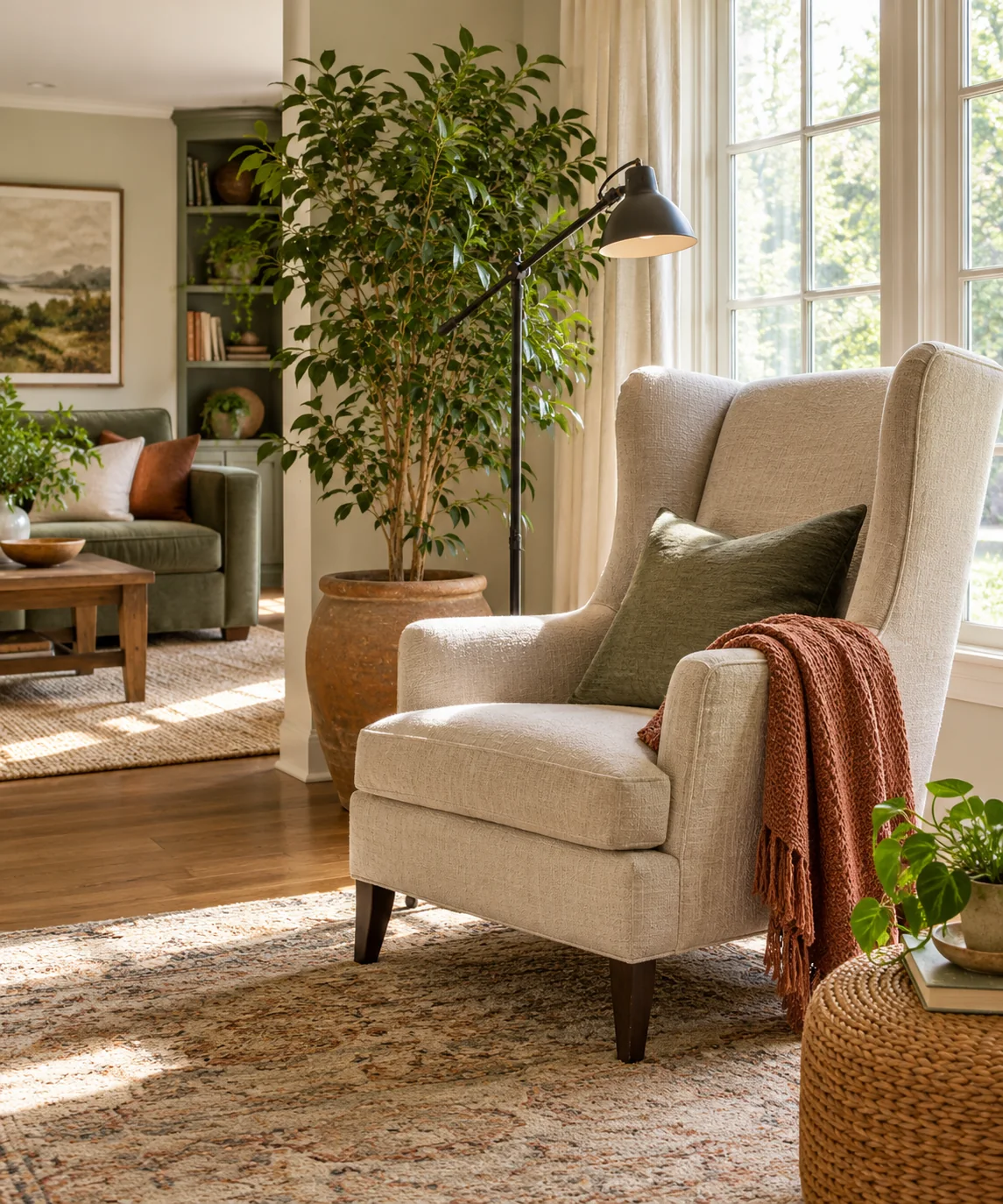
Strategic Seating Orientation
To mitigate screen distractions without building walls, angle a high-backed armchair away from the entertainment center and toward a daylight window or open corner. A tall backrest acts as a physical barrier that helps block peripheral screen flicker from behind the seated reader. When placing the chair, leave sufficient walking clearance between the chair back and main traffic routes so other occupants can navigate the room naturally without brushing against the reading nook.
Using Foliage as an Ambient Screen
A tall, leafy indoor plant—such as a rubber plant (Ficus elastica) or broad-leafed ficus—can serve as a soft visual boundary between the seating area and the media wall. Place the container in a weighted, leak-proof saucer positioned to catch adequate natural light without encroaching on personal elbow room or walkway paths. The foliage softens the boundary, dampens visual movement from television programs, and reinforces the feeling of an enclosed micro-zone without blocking natural room lighting.
Defining the Zone with Floor Textiles
An accent rug visually demarcates the reading corner as an independent micro-environment within a larger living room. Placing the front legs of the armchair squarely on the rug stabilizes the textile and prevents curling edges that create trip hazards. Choose a flat-weave or low-pile material that allows side tables or lamp bases to sit level, helping define the personal reading area without conflicting with the main room carpeting.
Balancing Natural and Focused Task Lighting
While positioning seating toward an exterior window offers helpful daytime reading light, direct sunlight can wash out printed pages or cause eye fatigue. Sheer window curtains diffuse harsh midday light to create comfortable reading conditions. For evening sessions, incorporate a dedicated floor lamp with an adjustable, focused task shade positioned beside or slightly behind your reading shoulder, keeping light trained on your page rather than casting glare toward the TV area.
Safe Cable Management and Compact Surfaces
Pair the armchair with a compact side table sufficient for a beverage, spectacles, and a book. When positioning floor lamps, keep cables managed safely to prevent hazards. Never run power cords underneath area rugs or runners, as foot traffic can wear through insulation and cause heat buildup or fire risks. Position the lamp near an accessible wall outlet, and use durable surface cord protectors along baseboards if a cable must cross near circulation paths.
YOUR STARTING POINT
A little checklist.
Original editorial guidance. Images are AI-generated concepts, not photographs of completed projects. Our sources and approach.
Questions to consider
How can I tell if my plant receives adequate light in this corner?
Check the light requirements of your specific plant species against the window exposure. Broad-leafed houseplants generally prefer bright, indirect daylight, so monitor for steady growth and rotate the pot periodically to maintain upright form.
What should I do if my room lacks space for a large wingback chair?
Select a compact armchair with a supportive backrest and angle it deliberately toward a window. Even a streamlined frame can shield peripheral sightlines when paired with an adjacent bookshelf or standing floor plant.
How should I handle lighting cords if the nearest outlet is several feet away?
Keep cords routed along room perimeters or baseboards using adhesive cable clips, or cover exposed floor sections with low-profile, beveled rubber cord protectors rated for foot traffic. Never hide cords beneath rugs.