Small Balcony Layouts · THE GUIDE
Zone a Micro Balcony with Interlocking Deck Tiles and Smooth Pebbles
Interlocking modular deck tiles offer an adaptable way to refresh an outdoor slab without altering the underlying concrete or violating standard lease agreements. However, outdoor flooring projects must prioritize unimpeded drainage and comply with specific building bylaws before installation begins. Incorporating unanchored decorative materials like loose pebbles requires extreme caution, as loose stones can easily wash into scuppers, cause blockages, or present falling hazards on high floors. Thoughtful planning focuses on modular coverage that accommodates expansion, respects door clearances, and maintains clean drainage routes toward exterior outlets.
Jump to the checklist ↓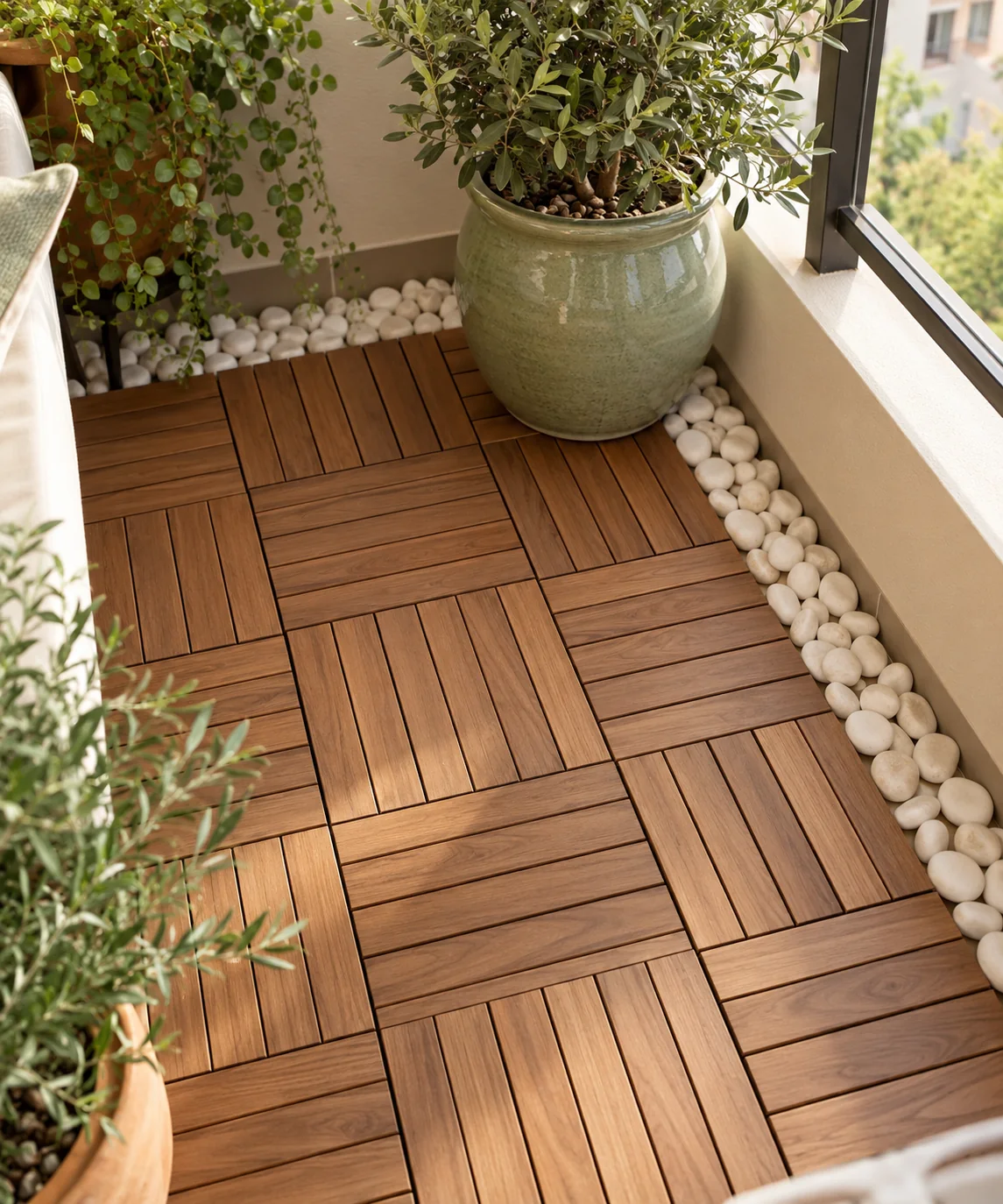
Review Balcony Rules and Surface Drainage
Before buying materials, review your tenancy agreement, strata rules, or condominium bylaws regarding surface coverings on balconies. Confirm that floating floor tiles are permitted. Next, examine the slab surface to understand how rainwater drains toward scuppers or perimeter gutters. Outdoor tiles must not trap water against exterior walls or elevate the walking surface above door thresholds. Inspecting the floor beforehand ensures you select tile systems that facilitate rapid vertical and horizontal drainage beneath the slats.
Plan the Modular Tile Layout
Measure the balcony dimensions and plan a layout that minimizes the need to cut composite or wood slats. Start the tile arrangement from the doorway or most visible edge, snapping the integrated interlocking bases together by hand. Leave a practical expansion gap between the tile edges and perimeter walls to accommodate moisture-related swelling and seasonal temperature swings. Avoid installing tiles flush against structural walls or door sills where they could restrict natural runoff or rub against finishes.
Manage Perimeter Margins Safely
Many layouts leave small perimeter gaps around the edges of a modular tile grid. While decorative river stones are often considered for these spaces, loose aggregates introduce hazards on upper-level balconies if displaced by weather or cleaning. If perimeter fills are used, they must be contained, appropriately sized to prevent entering drainage outlets, and permitted under property regulations. In many cases, leaving clean, accessible border channels is preferable for monitoring slab conditions and sweeping away accumulated debris.
Select and Arrange Balcony Furnishings
When introducing seating, tables, or potted plants, verify that total additions conform to your building's allowable live and dead load limits. Distribute furnishings across the tiled surface rather than concentrating excessive weight in one location. Place saucers beneath plant containers to catch excess water and prevent mineral staining on tile surfaces. Ensure that furniture placement keeps the main doorway unobstructed and allows full, safe movement around the perimeter.
Inspect and Clean Drainage Paths Seasonally
Debris, airborne silt, and fallen leaves naturally accumulate beneath floating floor systems over time. Periodically lift selected tiles, particularly near drainage outlets and corners, to inspect the slab for sediment accumulation. Clear away trapped matter using a brush or shop vacuum to keep water paths open. Follow manufacturer instructions regarding UV protectants or exterior oils for wood tiles to minimize weathering without using harsh chemical sealers.
YOUR STARTING POINT
A little checklist.
Original editorial guidance. Images are AI-generated concepts, not photographs of completed projects. Our sources and approach.
Questions to consider
Can deck tiles be installed over uneven concrete pads?
Interlocking tiles require a reasonably level surface to keep connectors aligned. While minor surface roughness is acceptable, significant dips or cracks can cause joints to disengage or rock underfoot, requiring evaluation before laying tiles.
Are loose decorative stones safe to use on high-rise balconies?
Loose stones can pose severe safety risks if they fall from heights, and small pebbles frequently wash into scuppers during cloudbursts. Many buildings ban loose aggregates; consult management before considering any unbonded materials.
How often do modular wood deck tiles require cleaning?
Inspecting underneath tiles twice a year is typically sufficient to prevent drainage blockages from dust and organic litter. Wood slats may also require occasional washing and re-oiling depending on weather exposure and manufacturer directions.