Sage and Cream Interiors · THE GUIDE
Zone a Studio Seating Area With a Cream Flatweave Rug Over Jute
In an open-concept studio apartment, defining a dedicated living zone without solid partitions requires thoughtful spatial boundaries. Flooring serves as your strongest visual anchor. By pairing a generous, texture-rich jute base rug with a smaller cream flatweave rug on top, you establish an inviting conversation zone while protecting your flooring. This layered styling approach frames seating furniture, dampens room echo, and introduces subtle tonal contrast without crowding usable floor area. The combination keeps the studio feeling airy while clearly demarcating where the bedroom ends and the lounge begins.
Jump to the checklist ↓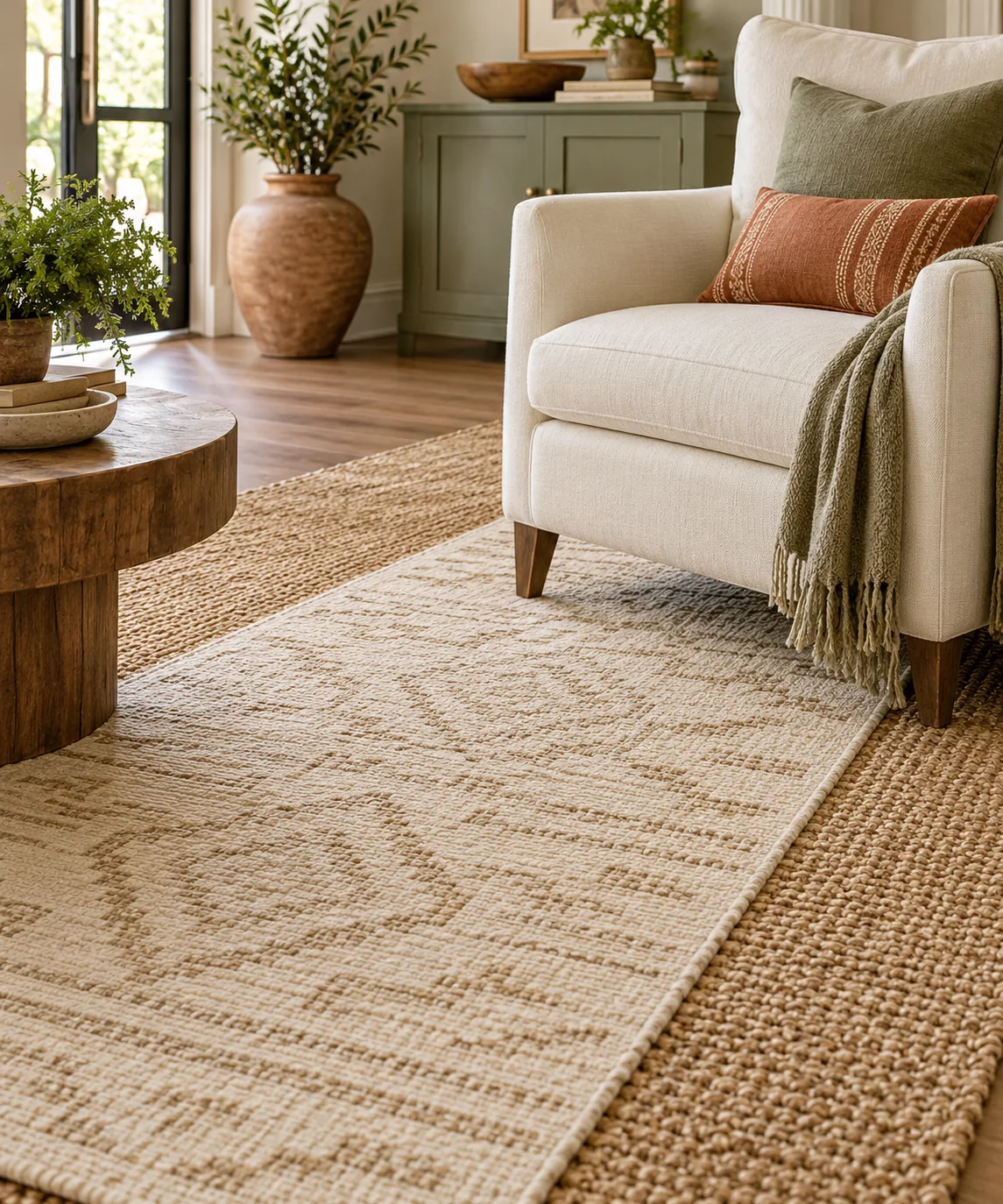
Selecting Base Dimensions and Walkway Clearances
A natural jute rug acts as a grounding visual base for a studio seating arrangement. When selecting rug dimensions, aim to anchor at least the front legs of major seating pieces to establish a coherent lounge footprint. In compact studio apartments, perimeter wall clearances will vary based on layout constraints; focus on leaving sufficient bare floor along primary paths so doors and drawers swing open freely. A textured woven base visually defines the living area without requiring physical room dividers.
Layering the Cream Flatweave Accent
Centering a smaller cream flatweave over the natural jute base introduces soft tonal contrast and tactile comfort underfoot. Orient the top rug to follow the primary seating line, allowing an even border of the underlying jute to remain visible around its perimeter. Resting the front feet of an armchair or sofa across the edge of the flatweave helps weight the textile down while visually uniting the layered pieces into a single, cohesive seating zone within the open floor plan.
Addressing Movement and Tripping Considerations
Layering textiles on smooth flooring requires practical slip mitigation. Place a non-slip rug pad beneath the jute foundation to reduce shifting against hardwood or tile surfaces. Because flatweaves can slide against textured plant fibers, use an underlay or grip pad designed specifically for rug-on-rug layering. Regularly check that corners and outer edges lie flat, as changing humidity and foot traffic can cause natural fibers to ripple or curl over time.
Balancing Neutral Tones with Sage Accents
The warm, earthy tones of natural jute and the brightness of a cream flatweave create a balanced neutral backdrop. To connect the floor arrangement with the wider room, incorporate subtle sage accents through throw pillows, a lightweight blanket, or ceramic vessels on nearby tables. These muted green touches echo natural foliage and provide quiet visual interest, maintaining an airy, uncluttered feel throughout a multifunctional studio apartment.
Caring for Layered Natural Fibers
Different rug weaves require distinct maintenance routines to keep fibers intact. Use suction-only vacuum settings across both rugs, as rotating brush heads can pull flatweave threads or fray coarse jute loops. Address accidental spills promptly by blotting moisture with a dry, lint-free cloth rather than rubbing, which can drive stains deeper into plant cellulose. Periodically rotating both rugs helps distribute routine foot traffic and ambient light exposure evenly across their surfaces.
YOUR STARTING POINT
A little checklist.
Original editorial guidance. Images are AI-generated concepts, not photographs of completed projects. Our sources and approach.
Questions to consider
Is a specialized pad necessary between a flatweave and a jute rug?
A rug-to-rug grip pad is recommended because smooth flatweave backings can slip against textured plant fibers, leading to ripples, bunching, and uneven wear.
How should spills on a light cream flatweave be handled?
Blot liquid immediately using a clean, dry white towel to lift moisture without pressing it into the weave. Check the manufacturer's care label for recommended spot-cleaning solutions.
Can layered rugs work in very small studio apartments?
Yes, provided the rug sizes are scaled appropriately to leave walking paths clear and prevent overlapping edges from obstructing doors, closets, or moving furniture.