Entryway Organization · THE GUIDE
Zone Heavy Traffic Footpaths With Washable Runner Rugs
Entryway timber floors endure constant friction from grit, moisture, and street dirt carried in on shoe soles. A well-placed runner rug defines the walking path and traps outdoor particles before they migrate deeper into living areas. However, improper rug thickness or slippery backings often create tripping hazards or jam bottom door clearances. Incorporating a low-profile, machine-washable runner equipped with a stable underlay establishes a durable barrier that protects wood finishes. By measuring door swings and choosing practical weave structures, you create a cleanly zoned entryway that simplifies everyday floor maintenance.
Jump to the checklist ↓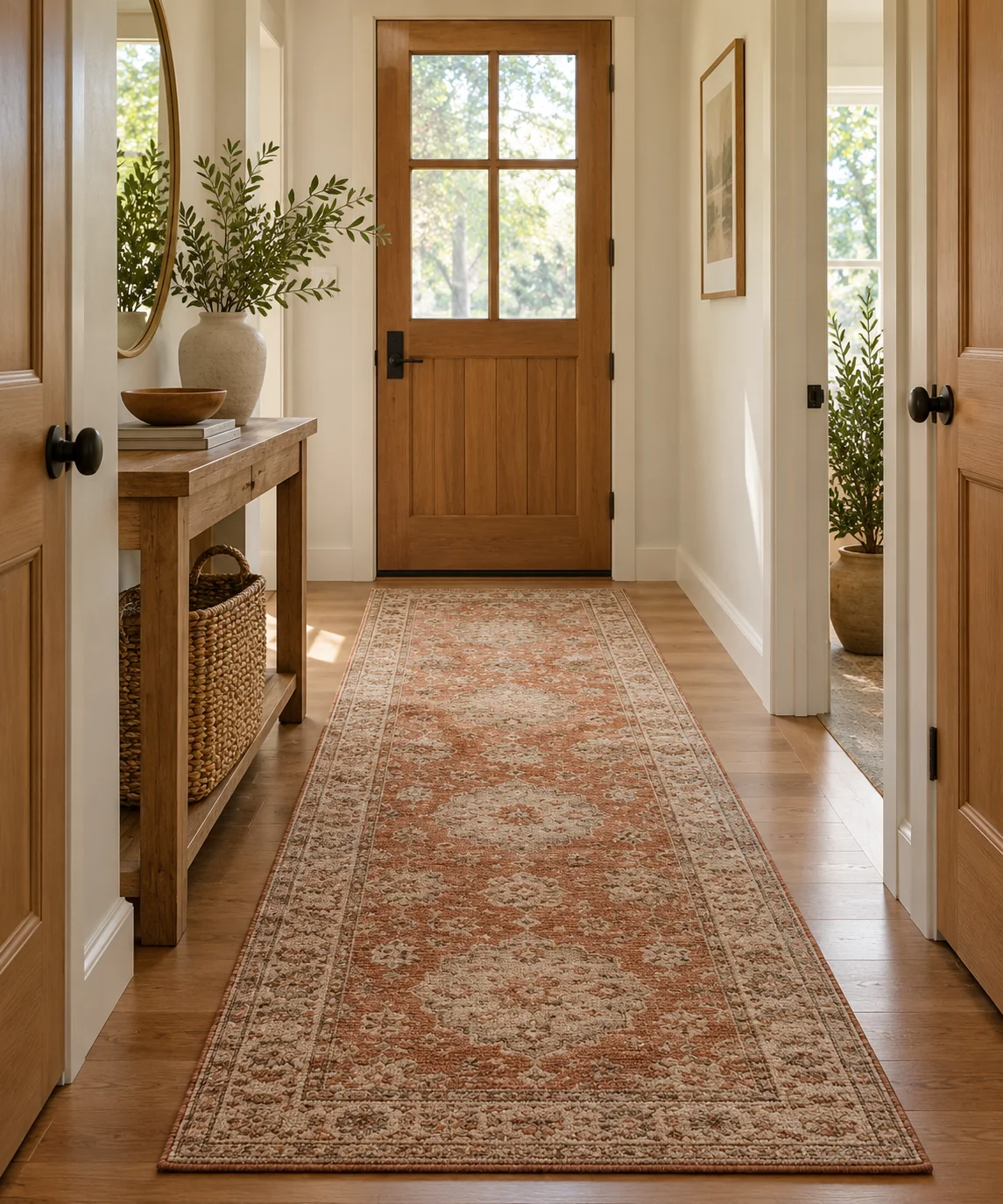
Measuring Clearance for Door Swings
Before purchasing a runner, assess the functional clearance beneath the entry door and any adjoining closet doors across their full arc of movement. Lay down a sample swatch, folded cardboard, or a coin stack to observe whether the door edge or bottom weatherstrip drags during opening and closing. Required clearances vary considerably between interior doors, exterior sills, and retrofit weatherstripping, meaning published rug thicknesses must always be tested against the actual opening. Confirm whether the runner can safely start beyond the threshold swing area or if an ultra-low-profile flatweave is necessary to avoid catching along the leading edge.
Choosing Resilient Flatweave Materials
Entryway runners must endure abrasive foot traffic while fitting comfortably inside residential washing machines. Flatwoven chenille, polyester blends, or tightly spun cotton work best because they lack high pile loops that capture grit and crushed leaves. Avoid thick tufted rugs, which hold dirt deep within their base and prove too stiff for home washing drums. Tight flatweaves provide a smooth, dense surface that catches surface dust effectively while releasing dirt quickly during routine cleaning cycles.
Securing Floors With Non-Slip Grip
A washable runner without adequate traction poses a significant slip hazard across polished timber floorboards. Always pair lightweight washable rugs with a dedicated non-slip rug pad or select models with integrated rubberized backing. Ensure the backing material is explicitly rated safe for wood finishes to avoid chemical reactions that haze polyurethane coats. The underlay must sit flat across the entire underside of the rug, keeping corners pinned down securely and preventing dangerous bunching under hurried footsteps.
Defining Visual Entry Boundaries
A runner rug does more than protect floorboards; it visually defines the transition between outdoors and private living zones. Center the runner along the natural walking corridor, leaving a balanced margin of exposed floor on either side to suit the corridor width. This border frames the space, making the corridor feel deliberate rather than crowded. Align the end of the runner with the boundary of your coat drop zone to encourage guests and family to remove footwear before stepping onto uncovered flooring.
Washing and Maintenance Schedules
Sustain runner performance through regular vacuuming with a suction-only setting to avoid unravelling edge binding. Shake the rug outdoors weekly to release embedded grit that dulls timber underneath. Wash the runner periodically according to manufacturer instructions, using a cold, gentle machine cycle with mild detergent. Air dry flat across a drying rack; high machine heat can degrade non-slip backings and warp edges. Ensure the timber floor beneath is completely dry before reinstalling the runner to avoid trapping moisture.
YOUR STARTING POINT
A little checklist.
Original editorial guidance. Images are AI-generated concepts, not photographs of completed projects. Our sources and approach.
Questions to consider
How often should a washable entryway runner be cleaned?
Vacuum the runner weekly with suction to remove surface grit. Machine wash the rug every four to six weeks, or sooner following storms, using cold water and mild detergent on a gentle cycle.
Can a washable runner cause damage to hardwood floor finishes?
Improper backings like cheap PVC can react with wood sealants over time. Choose natural rubber pads or rugs labeled safe for hardwood, and never place a runner over damp or freshly treated wood.
What should I do if the runner corners curl upward?
Curling usually results from dryer heat or uneven tension. Mist the curled corner lightly with clean water, press it flat under a heavy book overnight, and always air dry washable rugs after laundering.