Pantry Organization · THE GUIDE
Zoning Kitchen Small Appliances in Deep Lower Pantry Cubbies
Deep lower pantry cubbies often turn into chaotic drop zones where bulky countertop machines sit tangled together in the dark. Heavy small appliances like food processors, waffle irons, and hand mixers demand substantial clearance and stable footing, making the bottom shelf their safest destination. By establishing deliberate appliance zones based on physical weight and frequency of use, you clear valuable preparation surfaces without making these tools hard to retrieve. Implementing felt trays and cord wraps turns an unwieldy lower compartment into an ergonomic staging area, keeping motors protected and components accessible whenever complex recipes call for them.
Jump to the checklist ↓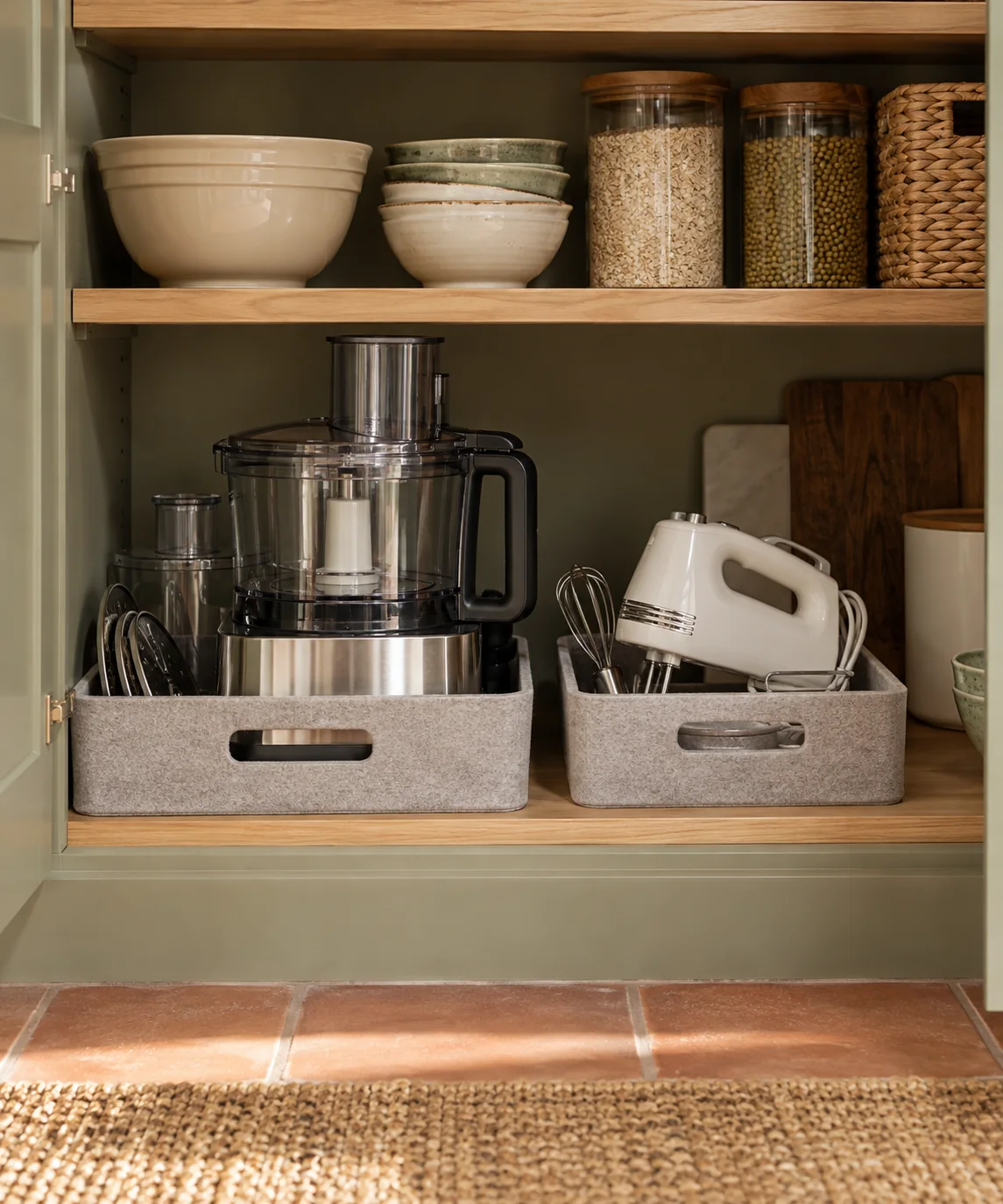
Measuring Heights and Base Clearances
Begin by measuring the height, width, and depth of the lower cubby, taking note of door hinges and face frames that constrict the entrance opening. Measure your appliances with their lids and bowls attached, noting the tallest component, which is typically a food processor pitcher or stand mixer arm. Allow practical overhead clearance above the tallest machine to prevent bruised knuckles and clear cabinet overhangs when lifting units out. Verify that the shelf structure and its existing supports are rated for concentrated appliance storage.
Using Felt Trays for Smooth Gliding
Reaching into deep lower shelves can strain your back if heavy appliances catch on raw shelf surfaces. Place flat-bottomed felt or heavy fabric trays beneath waffle irons and food processors. The smooth exterior of the felt glides easily across laminate or sealed wood shelves, creating an effective pull-out mechanism without installing mechanical drawer slides. When you need a machine, gently pull the tray forward by its rim, lift the appliance with two hands from the front edge, and slide the tray back.
Organizing Attachments and Loose Accessories
Multi-piece appliances quickly cause disarray if accessories scatter around the shelf floor. Pair each machine with a small, dedicated bin positioned directly behind or beside it. Store hand mixer beaters, dough hooks, and food processor slicing discs in rigid, open containers rather than leaving them loose in the bowl. Storing blades separately prevents scratched plastic bowls and protects your fingers when reaching into the cabinet. Label each container so family members return specialized parts to the correct appliance zone immediately after washing.
Cord Management for Tangle-Free Retrieval
Loose power cords create tripping hazards, catch on adjacent hardware, and cause appliances to tumble when pulled. Bundle each cord neatly against the appliance housing using reusable hook-and-loop straps or dedicated cord wraps. Avoid wrapping cords tightly around motor housings, as sharp bends can stress internal copper wiring over time. Tucking the plug into the strap keeps the cord flat and contained within the appliance's physical footprint, preventing cords from dragging across lower shelves or snagging on neighboring gear.
Weight Distribution and Long-Term Care
Heavy small appliances require mindful placement across pantry shelving to prevent long-term shelf deflection. Rather than concentrating multiple motorized units in one spot, distribute appliances across available shelf space and refer to the cabinet manufacturer or landlord guidelines for maximum load capacities. Keep frequently used items near the outer front edge for natural, balanced lifting. Wipe shelf bases periodically to remove stray crumbs, and check that felt glide bases remain clean so they slide without gathering abrasive grit.
YOUR STARTING POINT
A little checklist.
Original editorial guidance. Images are AI-generated concepts, not photographs of completed projects. Our sources and approach.
Questions to consider
Why should I use felt trays instead of rolling wooden pull-out drawers?
Felt trays provide smooth sliding without permanent drilling, hardware installation, or losing vertical clearance to tracks. They are budget-friendly, rental-safe, and easily cleaned, making them a practical reversible alternative for deep pantry shelves that need flexible rearrangement.
How do I determine if a pantry shelf can hold multiple small appliances?
Check the cabinet manufacturer documentation or consult property management to verify the load rating of your specific shelving system. Shelf span, material thickness, and bracket mounting style all affect capacity, so avoid assuming standard limits and distribute weight across the shelf rather than piling appliances together.
What is the best way to prevent appliance cords from unraveling?
Use reusable hook-and-loop cord straps fastened around the loosely looped cord. Avoid wrapping cords tightly around motor casings or bending them sharply near the plug base, as excessive tension can damage internal wire strands over long-term storage.